The hall bathroom in my house was 38 square feet of avocado tile, a chipped tub, and a vanity built into the wall in a way that suggested somebody had given up halfway through. I gave myself six weekends and a budget of $2,500 to redo it. Here's what actually happened.
Weekend 1 — Demo and the first surprise
Took out the vanity, the toilet, the tile. Everything but the tub. The walls behind the tile were drywall, not concrete board, and were softer than I'd hoped. The plumbing rough-in was 1972-era and would need to come out for the new vanity to fit.
Cost so far: $0 for demo, $80 in dump fees.
Weekend 2 — Plumber day
I'd planned to redo the rough-in myself. By midday Saturday I'd called a plumber. The shut-off behind the wall was seized; I would have flooded the kitchen below if I'd kept going. The plumber spent five hours and charged $480. Worth every dollar.
Lesson: there are projects where DIY saves money, and there are projects where DIY is going to flood your house. Plumbing rough-in is closer to the second category.
Weekend 3 — Drywall and waterproofing
New cement board around the tub, regular drywall everywhere else, fresh insulation in the exterior wall. Waterproof membrane on the cement board. This is the weekend I learned how much I'd been winging it on the materials list — three trips to the hardware store on Saturday alone.
Tip I wish I'd known: write a complete materials list, then add 15% to every quantity. You will not regret over-buying. You will regret a half-finished tile job at 8pm on Sunday because you ran out of grout.
Weekend 4 — Tile
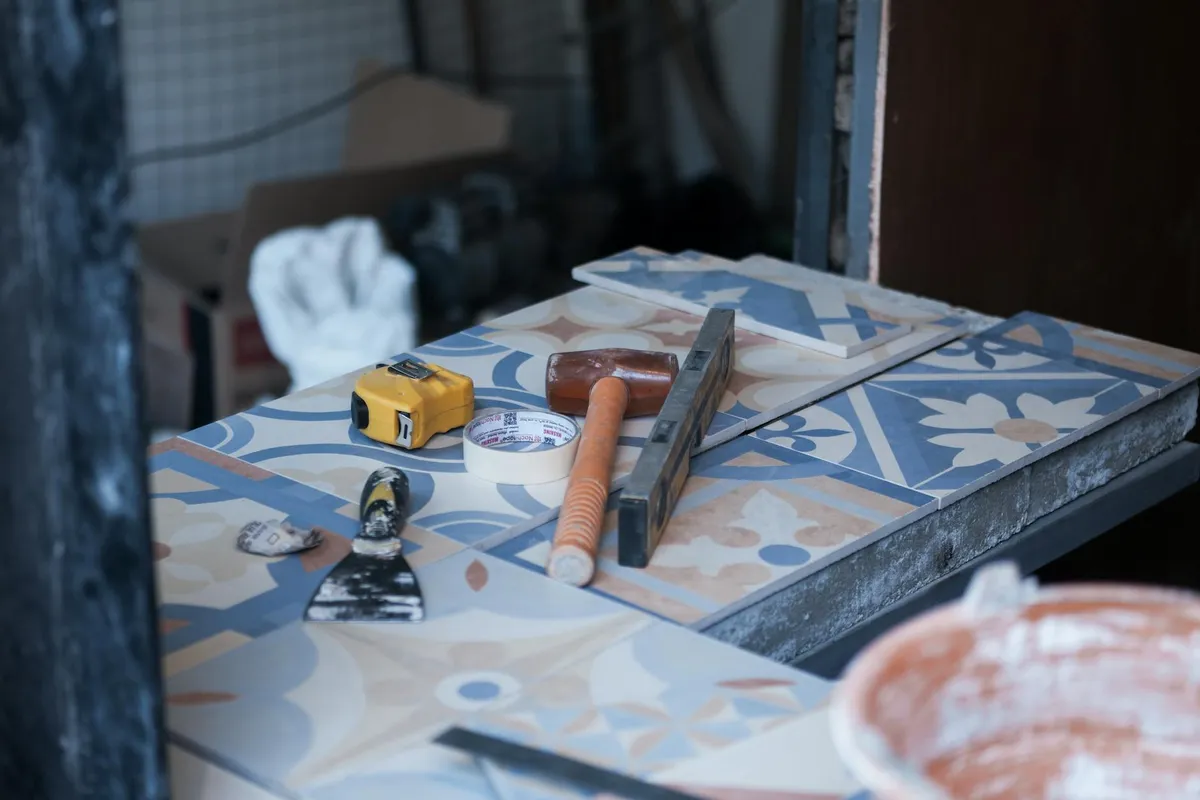
The big weekend. Subway tile in the tub surround, simple matte tile on the floor. Tile saw rented for $40. The tile took 14 hours of actual work, spread across two days. By Sunday evening my back hurt in a way I associated with people decades older than me.
The result: 80% of the tile is great. There are two cuts I made that I look at every time I shower. They are within a quarter-inch of perfect, but a quarter-inch in tile is the difference between "considered" and "homemade." I should have practised on the offcuts more before doing the visible cuts.
Weekend 5 — Vanity, toilet, fixtures
The fast weekend. New vanity (IKEA, $280), new toilet ($180), new faucet, new shower head, new lighting. None of these were hard in isolation. Done in two days. The vanity install particularly went smoother than expected — IKEA's flat-pack instructions actually work if you take them seriously.
Weekend 6 — Paint, caulk, the small stuff
The "almost done" weekend that always takes longer than it should. Caulk every seam. Touch-up paint everywhere. New mirror. New towel bar. Hang the new shower curtain. By Sunday evening, the bathroom was usable.
The thing nobody tells you about the last weekend: there's always an unexpected hour of "wait, I forgot the…" — outlet covers, switch plates, the right shower curtain rings, the toilet supply line. Plan for it.
The final budget
- Plumber (rough-in fix): $480
- Tile (subway + floor): $440
- Cement board, drywall, mud, mesh: $180
- Waterproof membrane: $95
- Vanity: $280
- Toilet: $180
- Faucet + shower head: $220
- Lighting: $130
- Mirror, hardware, accessories: $180
- Tile saw rental + thin set + grout: $135
- Paint: $80
- Buffer + small stuff: $400
Total: $2,800.
What I'd do differently
- Hire the plumber from the start. Saved time and a panic-call.
- Buy 15-20% extra of every consumable. Tile, grout, screws. The hardware store trips kill weekends.
- Practise tile cuts on offcuts before doing visible ones. Half a day of practice, a lifetime of straight cuts.
- Plan the week 6 list in week 1. The "almost done" punch-list always exists. Knowing what's on it ahead of time saves the last-Sunday-evening scramble.
What I'd do exactly the same
The whole project, basically. The bathroom is the room I use first every morning, and I made it specifically for me — small tile, simple lines, the lighting I wanted, none of the avocado of its previous life. Two years on, I'd sign up for the six weekends again.