I bought five drills in three years. None of them were on purpose. Each new one was the result of a previous one being wrong for what I actually needed. Here's what I learned, what I bought, and which drill I'd hand to a beginner today.
Drill 1 — The starter drill ()
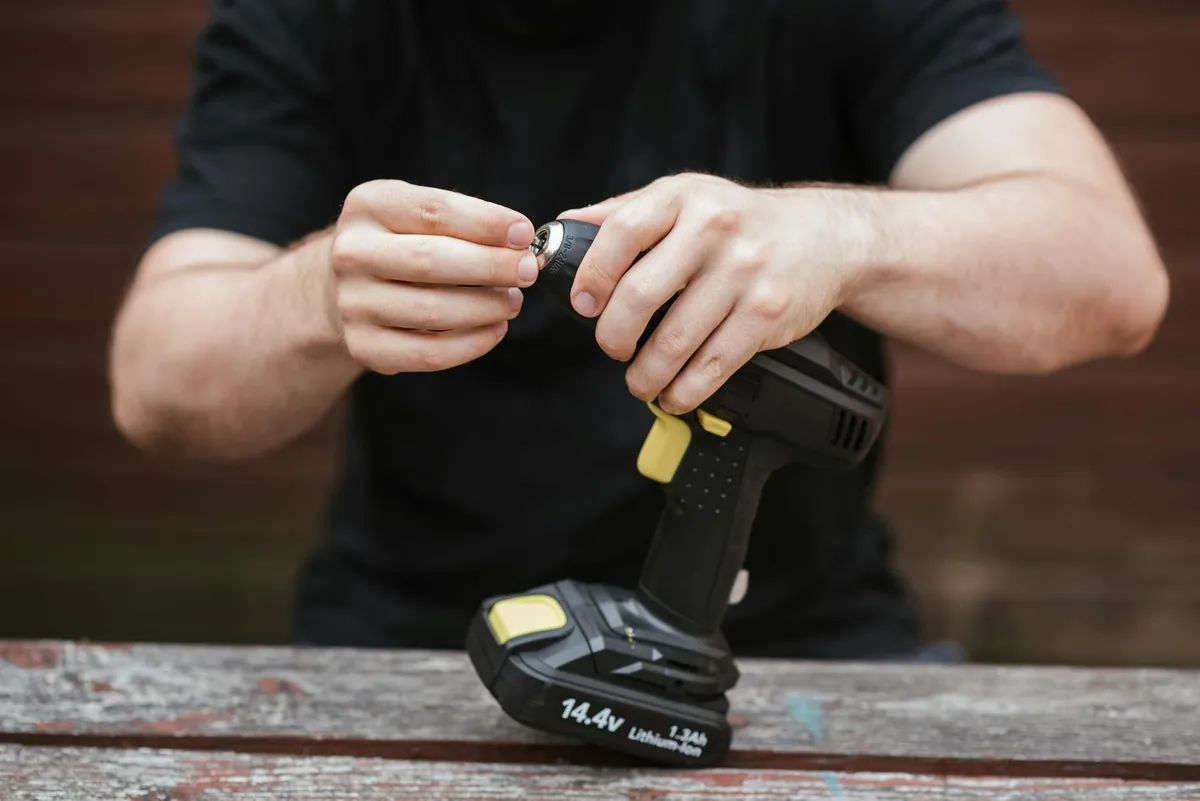
A no-name 12V drill from a hardware store going-out-of-business sale. It worked. Sort of. The battery lasted maybe 15 minutes of real work. The clutch had three settings, all of which felt the same. I drove maybe 200 screws with it before deciding I needed more drill.
What it taught me: cheap drills aren't bad as a starter, but the battery life is the limit. You'll think you're drilling slowly when really you're waiting for a recharge.
Drill 2 — The budget brand ()
A Ryobi 18V drill. This is the one I should have bought first. Plenty of power for everything I was doing — driving screws, pre-drilling, paddle-mixing thinset. Battery lasts a full Saturday. The Ryobi battery system is also (this matters) cross-compatible with a hundred other Ryobi tools, which I didn't appreciate at the time.
I still own this one. It's the drill I reach for first.
Drill 3 — The impact driver (0)
This is the drill that changed my mind about what drills do. Or rather — it's NOT a drill. It's an impact driver. Different tool. Different purpose. For driving screws fast, especially long screws, an impact driver does what a drill cannot. I bought this for the deck project. I now use it for almost any screw work.
If you're doing carpentry, an impact driver is the second tool to buy after a drill. They are not redundant. They do different things.
Drill 4 — The premium brand (0)
I bought this because I'd convinced myself my Ryobi was holding me back. It wasn't. The premium brand drill (DeWalt) is a genuinely better tool. Faster, more torque, better build quality. But for what I do — homeowner-grade DIY — it's overkill. I would not have noticed if someone had switched my Ryobi back.
Lesson: premium tools are real. They're also the wrong choice for amateurs. The pros who use them daily are paying for that quality with daily use. Most homeowners don't.
Drill 5 — The hammer drill (0)
Bought specifically to mount a heavy mirror into a brick wall. Used twice. Worth owning if you have brick or concrete in your house and you ever want to mount anything to it. Otherwise, rent. Buy this one only when you have a specific masonry project; do not buy it speculatively.
What I'd buy if I could rewind
Two tools, in this order:
- Ryobi 18V cordless drill kit ($90-120). Comes with two batteries and a charger. Plenty of power for everything a beginner needs. The battery system future-proofs you for other tools.
- Ryobi 18V impact driver ($90). Same battery system. Buy this six months in, after you've discovered you're doing more screw work than the drill alone handles well.
That's $200 total. It'll cover 90% of what a homeowner DIY-er needs. Skip everything else until a specific project demands it.
The buying mistakes I made
- Buying based on "brand quality" rather than need. A pro tool you don't use daily is a status object, not a tool.
- Buying speculatively. "I might need a hammer drill someday" leads to a hammer drill that's used twice in three years. Wait until the project demands the tool.
- Not understanding cordless tool ecosystems. Once you're on a battery system, the cost of staying on it is much lower than switching. I jumped between two systems and ended up with three chargers and four batteries that don't talk to each other.
One small thing that helps
When you buy your first drill kit, buy the version with two batteries. The kit with one battery looks like a deal. It isn't. The second battery is the difference between a productive afternoon and a 90-minute charge break in the middle of it. The "two-battery kit" upgrade is the highest-leverage $30 in the entire tool budget.